

What Was The Makeup Of The Crew On The Uss Howard De138
no coat of arms
available.
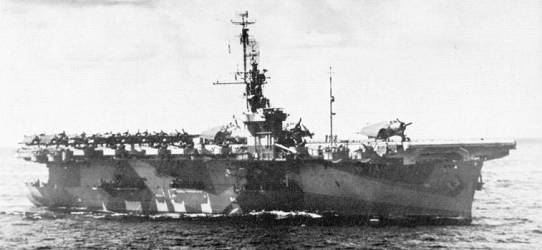
USS WAKE ISLAND was the eleventh CASABLANCA - grade escort carrier. Originally named DOLOMI BAY, the transport was renamed WAKE Island on April iii, 1943. Decommissioned on April 5, 1946, the WAKE ISLAND was stricken from the Navy list on the 17th; and subsequently sold for scrap to the Boston Metals Co., Baltimore, Medico., on April 19 1946.
Crew List:
This section contains the names of sailors who served aboard USS WAKE ISLAND. It is no official listing but contains the names of sailors who submitted their information.
History of USS WAKE Isle:
USS WAKE ISLAND (CVE 65) was laid down nether a Maritime Committee contract (MC hull 1102) on 6 February 1943 at Vancouver, Wash., by the Kaiser Shipbuilding Co., Inc.; launched on xv September 1943 sponsored past Mrs. Frederick Carl Sherman, the wife of Rear Admiral Sherman; commissioned on 7 November 1943, Capt. Hames R. Tague in command.
Following commissioning, WAKE ISLAND received supplies, armament, and gasoline at Astoria, Oreg., and got underway on 27 Nov 1943 for Puget Sound and anchored the following day at Bremerton, Wash., where she continued to load supplies and ammunition. The escort carrier operated in the Puget Sound surface area conducting structural firing tests and making stops at Port Townsend, Sinclair Inlet, and Seattle before sailing southward on six Dec. She arrived at San Francisco on 10 December; took on fuel; and, two days later, headed for San Diego, arriving there on 14 December for shakedown and availability. Before departing, the escort carrier took on lath the personnel and planes of squadron VC-69.
On 11 January 1944, WAKE ISLAND got underway and steamed, via the Panama Canal, to Hampton Roads, Va., arriving at Norfolk on 26 Jan. Following availability, the escort carrier sailed on 14 February for New York in visitor with MISSION BAY (CVE 59), SWENNING (DE 394), and HAVERFIELD (DE 393).
On 16 Feb--subsequently loading supplies and embarking Army and Navy officers for transportation--WAKE ISLAND prepare course for Recife, Brazil, the first stop on her voyage to Karachi, India. She arrived at Recife on 1 March and made stops at Capetown, Due south Africa; and Diego Suarez Harbor, Madagascar; before arriving at Karachi on 29 March. The escort carrier began her render trip on 3 Apr and arrived back at Norfolk on 12 May.
She spent the residue of May and function of June undergoing alterations and an overhaul. She then took on board the planes and personnel of VC-58 and, on 15 June, gear up class toward Bermuda for duty as the nucleus of Task Grouping (TG) 22.6, a combined, air-and-surface, anti-submarine, hunter-killer group. The highlight of her cruise came on 2 July, when one of the carrier'due south Avengers intercepted the surfaced U-543 off the declension of Africa betwixt the Canary and the Cape verde Islands, making its fashion home afterward an unsuccessful patrol in the Gulf of Republic of guinea. The torpedo bomber'due south pilot, Ens. Frederick L. Moore, USNR, braved heavy antiaircraft fire from the German submarine while making two bombing attacks which sank the U-boat. However, no show appeared to confirm the kill, so the escort carrier and her escorts spent the ensuing fortnight hunting the already destroyed submarine.
Task Group (TG) 22.half-dozen began her next serious encounter with the enemy two minutes before noon on ii Baronial, when DOUGLAS Fifty. HOWARD (DE 138) sighted a U-gunkhole's conning tower some 8 miles abroad. She and FISKE (DE 143) were detached to investigate, while all planes in the area were recalled. A "killer" TBM, armed with depth bombs, was catapulted at 1209. At 1235, a torpedo--apparently fired past a second submarine--hit FISKE amidships and bankrupt her in two. The ships of the group managed to maneuver clear of two more torpedoes which were fired at the force. The first study of casualties listed 4 dead, 26 missing, and 55 seriously injured. FARQUHAR (DE 139) was discrete to support DOUGLAS Fifty. HOWARD and afterward to pick upwardly survivors. As the grouping was preparing to avenge the loss of FISKE, heavy fog and rain stopped all operations.
On 4 August, TG 22.6 was dissolved and, 4 days afterward, WAKE Isle fabricated rendezvous with Convoy UC-32 as it steamed westward. She left the convoy on the 11th and headed for Hampton Roads. She arrived at Norfolk on the 15th for alterations and repairs which lasted through the 25th. Following post-repair trials and a brief availability, the escort carrier sailed on 29 August for Quonset, R.I., to save MISSION BAY on carrier aircraft qualification operation duty which lasted through 30 Oct.
The next twenty-four hours, the escort carrier sailed for Norfolk with LEA (DD 118) and BABBITT (DD 128) as escorts and arrived on 1 November for a period of availability. On the 11th, she stood out of Norfolk in company with SHAMROCK BAY (CVE 84) and escorts spring, via the Panama Canal, for the west coast. The escort carrier entered San Francisco Bay on 28 November and moored at the Naval Air Station, Alameda, Calif., where she embarked two new aircraft squadrons before heading for Hawaii the following day. She moored at Ford Island, Pearl Harbor, on v December; detached squadrons VC-nine and VPB-149; and disembarked personnel, planes, and equipment. Ten days later, WAKE ISLAND--her flight deck laden with cargo and unable to launch or receive planes--got underway for the Admiralty Islands with escorts RICHARD M. ROWELL (DE 403) and O'FLAHERTY (DE 340). She arrived at Mitt on 27 December, discharged all cargo and passengers, sailed for the Palau Islands, and arrived at Kossol Reef Lagoon on New year'south Day 1945. Late that evening, she loaded ammunition from a clomp and got underway at 0642, bound for the Philippines and the forthcoming invasion of Luzon, in company with a tremendous fleet which had gathered for the operation.
Two days later, WAKE Isle passed through Surigao Strait and launched both SNAP (antisnooper air patrol) and LCAP (local gainsay air patrol). On 4 January 1945, she was operating in the Sulu Sea and launched a 3-60 minutes SNAP. The American planes sighted a single-engine Japanese float aeroplane on the water off the southeastern tip of Panay Island. It appeared to be in the easily of a salvage crew. 2 of the lookout man planes made two strafing runs each and left the plane riddled and the relieve crew dispersed.
The Fleet entered Panay Gulf about 100 miles northwest of Manila. WAKE ISLAND's surface search radar was jammed by enemy transmission, and the escort carrier went to general quarters at 1714. One minute afterwards, a Japanese unmarried engine plane appeared overhead in a steep diving attack on OMMANEY BAY (CVE 79), some 4,200 yards away. Fire immediately flared from that carrier's flight and hangar decks; and, later 20 minutes, her crew abased OMMANEY BAY under a dense cloud of black fume. She burned with explosions of ammunition and was finally scuttled astern of the Armada by a torpedo from an American destroyer.
On five Jan, WAKE ISLAND received 19 survivors of OMMANEY BAY who had been rescued by MAURY (DD 401). The ship went to full general quarters with bogies on the radar screen, but iii threatened raids failed to develop. At 1502, eight LCAP fighters from WAKE ISLAND pounced upon a division of Japanese Ground forces fighters. When the melee was over, the Americans claimed three certain kills and a probable without suffering any loss themselves. In all, WAKE Isle launched three LCAPs during daylight. At 1655, the send again went to general quarters to repel an air attack and for the next hour was under severe attack. At one time, six single-engine planes were simultaneously diving on carriers off WAKE ISLAND�s port side. Five were knocked downwards by antiaircraft burn, narrowly missing their targets, but ane managed a hit on MANILA BAY (CVE 61). She defenseless fire and dropped behind, but her efficient damage control efforts enabled her to resume her position in the formation in but 51 minutes, with her flight deck out of commission. During the assault, at least ten enemy planes splashed within 5,000 yards of WAKE ISLAND, and her ain antiaircraft gunners claimed three.
On 13 January, two enemy planes attacked SALAMAUA (CVE 96), cruising nigh eight miles backward of WAKE ISLAND. One of the attackers was shot down, merely the other scored a hit which briefly slowed that carrier. She shortly regained speed and controlled a burn down on her hanger deck without losing her position in the germination. Four days subsequently, WAKE Island was detached and left Lingayen Gulf in TG 77.14--a force consisting of eight escort carriers and their screen to retire to Ulithi, Caroline Islands. She anchored at Ulithi's southern anchorage from 23 to 31 January, undergoing availability and preparing for further operations. During this catamenia, her home port was changed from Norfolk to Puget Audio, Bremerton, Washington.
On x February 1945, the escort carrier got underway to bring together TG 52.2, which had been established to provide air encompass and support while escorting major units to the Volcano Islands and and so to furnish naval gunfire spotting, and direct air support for landing forces. The following solar day, she steamed to an area off Saipan-Tinian where rehearsals for the invasion took place. On 13 Feb, WAKE ISLAND's commanding officer was designated OTC of Chore Unit (TU) 52.2.i.
On xiv Feb, the escort carrier prepare course for Iwo Jima and, two days later, arrived at her operating area 49 miles from the southwestern tip of Iwo. Presently afterward daylight, the heavy bombardment group began shelling shore installations on the island. Planes from WAKE Isle flew spotting sorties, attacked defensive works with rocket fire, and flew local antisubmarine patrols and hydrographic ascertainment flights over the beaches. D 24-hour interval for the invasion of Iwo Jima was 19 February; and, on that mean solar day, WAKE ISLAND operated every bit before, flying 56 spotting sorties and firing 87 rockets.
BISMARCK Bounding main (CVE 95), a carrier in her grouping, was sunk by enemy air attack on 21 Feb. The next mean solar day, WAKE Isle was discrete and ordered to keep to a rendezvous point due east of Iwo Jima. At that place, she was refueled on 23 Feb and set course to return to the operating area eastward of Iwo Jima. The following day, she took station some 35 miles from the southern tip of Iwo Jima and flew 55 spotting sorties, expending 205 rockets. In the ensuing weeks, WAKE Isle continued her operations supporting the marines who paid with pain and blood for each foursquare foot of the bitterly defended island. On v March, she received a message of special interest from Commander, TU 52.two.1, Rear Admiral Clifton Sprague: "If your ship is as good as your Air Department and Squadron, it is a standout. I have seen most all the combat CVEs� work and I must say the Wake tops them all for efficiency, smoothness and expert judgment. I hope nosotros are together over again."
After 24 consecutive days of operations, WAKE ISLAND retired on 8 March from her station off Iwo Jima and rendezvoused with SAGINAW BAY (CVE 82) westward of the isle. The adjacent day, they headed for Ulithi and arrived there on 14 March.
The escort carrier spent the next v days at anchor preparing for another operation. She got underway on 21 March to supply air support for forces virtually to invade Okinawa. On 25 March, she arrived in the operating surface area roughly 60 miles due south of Okinawa Jima and began sending flights over Kerama Retto beaches and Okinawa. WAKE Island continued her support of the campaign through the initial landings at Okinawa on one April.
On the tertiary, the escort carrier was operating southeast of Okinawa. At 1722, she completed the landing of her fifth spotting sortie, and all her planes were back on lath. Viii minutes later, she went to full general quarters and enemy bogies were reported. At 1742, a vehement moving ridge hit the ship while planes were being moved for spotting on the flight deck. 2 FM-2s were thrown off the flight deck into the water. Ii fighters were flipped over on their backs, and two others received severe damage when tossed about.
At the same instant, 2 FM-2s broke loose from their lashings on the hangar deck and collided with major damage to both. At 1744, a Japanese unmarried-engine plane plunged at the send from a high bending and missed the port frontward corner of the flying deck, exploding in the h2o beside the forecastle. Xxx seconds later, a 2d like plane whistled down on the starboard side at tremendous speed, narrowly missing the bridge structure and plunging into the h2o almost 10 feet from the hull. The airplane exploded later on impact, ripping a pigsty in the ship�s side below the waterline, about 45 anxiety long and about 18 feet from top to lesser and making many shrapnel holes. Parts of the airplane were thrown onto the forecastle and into the gun sponsors. Various compartments were flooded, and the beat out plating cracked between the start and second decks. Other shell plating buckled, and the chief condensers were flooded with salt water, contaminating some 30,000 gallons of fresh h2o and lxx,000 gallons of fuel oil. At 1824, salting made it necessary to secure the forward engine, and the send proceeded on 1 propeller. Remarkably, there were no injuries; and, by 2140, cosmetic measures had been taken, and the ship was again steaming on both engines. The adjacent day, WAKE Isle steamed to Kerama Retto anchorage with escorts DENNIS (DE 405) and GOSS (DE 444). While she remained there undergoing inspection by the armada salvage officer, special precautions were taken to guard confronting possible Japanese suicide swimmers from islands of the cluster non yet secured.
The escort carrier gear up grade for Guam on 6 April 1945 and, iv days later, arrived at Apra Harbor for repairs in drydock which lasted through twenty May. The next day, the ship, in company with WANTUCK (APD 125), headed for Okinawa where she resumed her mission of supporting the troops on the island.
WAKE ISLAND was then discrete on two June and escorted by RALPH TALBOT (DD 390), proceeded to Kerama Retto for replenishment. At Kaika Harbor, Kerama Retto, she loaded bombs, rockets, and dry and fresh provisions, despite many enemy aircraft in the vicinity. The escort carrier made rendezvous with COWANESQUE (AO 79) for refueling and, in one case her tanks were full, returned to the operating area off Okinawa on vi June 1945.
The following day, WAKE Isle, as role of the task unit, engaged in strikes on Sakashima Gunto. NATOMA BAY (CVE 62) was hit by a suicide plane, and SARGENT BAY (CVE 83) was attacked by a 2d. WAKE ISLAND's support operations continued until 15 June when Rear Admiral Durgin landed on board the escort carrier for an official visit. In a ceremony held on the flight deck, he presented citations and awards to 16 pilots of VOC-1.
The following twenty-four hours, WAKE Island and DENNIS were detached, proceeded independently for Kerama Retto, and arrived there on 17 June. She was replenished then returned to the area southwest of Okinawa to resume flight operations. Two days later, WAKE ISLAND received a message detaching her from TG 32.1 due to battle damage received on 3 April and a subsequent finding by the Bureau of Ships that "awaiting yardwork, this vessel is considered unsafe for operations in a forward expanse." She headed for Guam and conducted firing practices and launched LASP sorties en route. Upon her inflow at Port Apra on 24 June, all personnel of squadron VOC-1 were transferred to Naval Air Base of operations, Agana.
Between 25 June and 3 July, WAKE Island, loaded with nine Hellcats, 24 Corsairs, 11 Avengers, and 2 Piper Cubs, made a round-trip to Okinawa and delivered aircraft with 46 ferry pilots to Tactical Air Force, Yontan Field, Okinawa.
Arriving back at Guam, the escort carrier unloaded ammunition and aviation spares and took on board 300 sacks of U.s.a. mail along with 10 Corsair and twenty Helldiver duds for transportation, then sailed for Pearl Harbor in company with Greatcoat ESPERANCE (CVE 88) and BULL (APD 78). On July 10th, she detached BULL and Greatcoat ESPERANCE and proceeded independently to Hawaii. A week afterward, the ship arrived at Ford Island, Pearl Harbor, where she unloaded her cargo and took on board 138 enlisted men and 49 officers as passengers to the continental United States. On xviii July, WAKE ISLAND cleared the channel at Pearl Harbor, jump for southern California. She arrived at San Diego Calif., on 25 July and discharged her passengers and planes.
While moored at North Island, San Diego, the escort carrier took on board vi Avengers, x Wildcats, 53 officers, and xiii men of squadron VC-75 for grooming and carrier shipping landing qualifications off San Nicholas Island. She continued to conduct flight qualifications through December 1945.
This period was distinguished on 5 November when the offset jet-propelled landing on an shipping carrier was fabricated on WAKE ISLAND. Personnel of VF-41 and representatives of the Ryan Company came on board during the morning, and the escort carrier got underway from the Naval Air Station, San Diego, in visitor with O'BRIEN (DD 725). For ii days, she conducted tests and landing qualifications for the jet-propelled FR-1s (Fireballs).
With the new year 1946, WAKE ISLAND prepared for inactivation. She was decommissioned on 5 April; struck from the Navy list on the 17th; and subsequently sold for fleck to the Boston Metals Co., Baltimore, Dr.., on nineteen April 1946.
WAKE ISLAND earned three battle stars during World State of war 2.
Source: https://www.navysite.de/cve/cve65.htm
Posted by: mccainockbet.blogspot.com
0 Response to "What Was The Makeup Of The Crew On The Uss Howard De138"
Post a Comment